Connected Systems | Customer expectations continue to rise, field organizations expect real-time visibility, and corporate teams are under pressure to move faster while managing increasingly connected customer and field experiences. But as growth strategies become more sophisticated, many direct selling companies are experiencing increasing friction behind the scenes as new systems are layered together over time. Modern direct selling now depends on systems, reporting, payments, field tools, customer experiences, and business data staying connected across the organization.
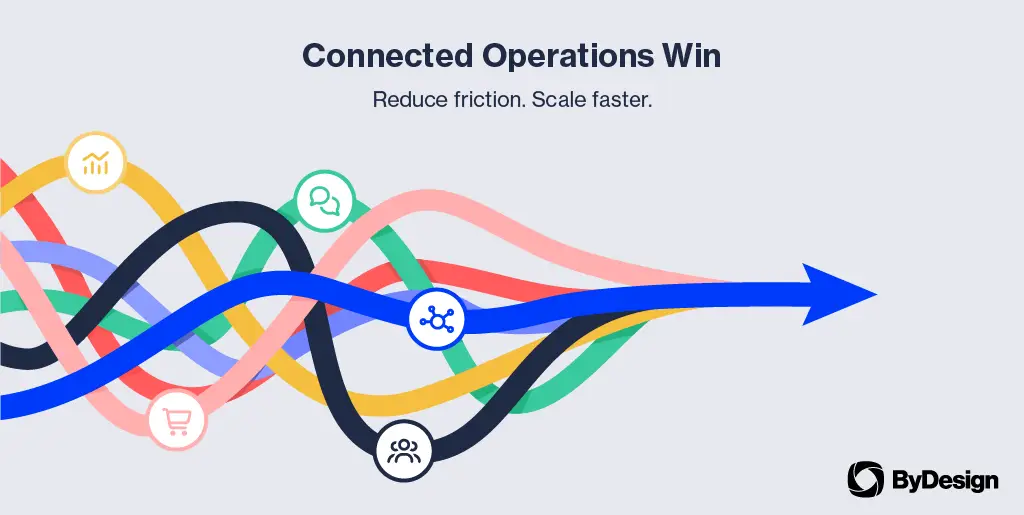
Growth Gets Harder When Systems Can’t Keep Up
As companies grow, they often add new tools, workflows, and experiences designed to increase engagement, improve customer acquisition, and create more flexibility.
That may include:
- AI-powered field tools and seller experiences
- affiliate-style programs
- customer referral initiatives
- social commerce strategies
- expanded ecommerce experiences
- new incentive structures
Individually, these initiatives often make sense. The challenge is what happens behind the scenes as they start to overlap.
Many companies experience friction across the business, including:
- disconnected reporting
- duplicate customer records
- manual reconciliation between systems
- compensation management challenges
- inconsistent field experiences
- delayed visibility into performance
Over time, disconnected systems and workflows can compound quickly. What may begin as a small gap between systems or teams can eventually impact nearly every department across the organization. The more systems and workflows companies add, the more those small disconnects add up.
At ByDesign, we’ve seen this challenge firsthand across organizations navigating growth and evolving field engagement strategies. Whether companies are expanding into new global markets, evolving field engagement strategies, or launching new growth initiatives, alignment between systems, workflows, and business data becomes increasingly important as the business scales.
Our recent article, Building Strategic Promotions and Incentives to Engineer Sustainable Growth, explores how even well-intentioned growth initiatives can create instability when systems, incentives, and execution are not aligned behind the scenes.
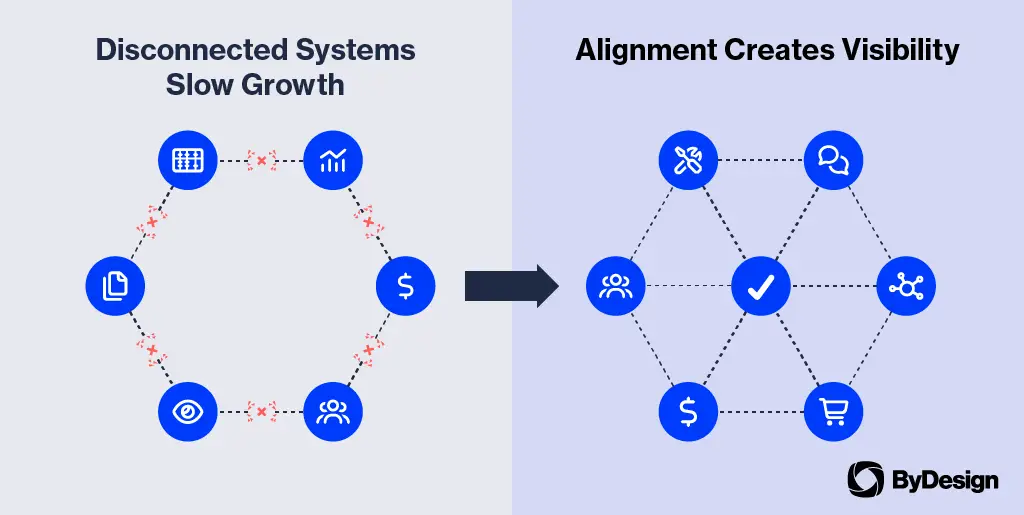
Friction Impacts the Entire Organization
The friction created by disconnected systems and workflows is often viewed as a technology issue, but its impact extends far beyond IT teams.
Operations teams can become buried in manual processes and workarounds that slow execution. Finance teams face growing challenges around compensation management, reporting accuracy, and payout visibility when data lives in multiple systems. Marketing teams struggle to gain a complete view of customer activity and campaign performance when information is fragmented across platforms.
The field feels this friction as well. Inconsistent workflows, disconnected tools, and delayed visibility can reduce confidence and create frustration for the people driving growth every day. And when systems become difficult to navigate or disconnected experiences slow momentum, field activity often declines. Over time, that friction can lead to reduced engagement, lost momentum, and ultimately the loss of representatives altogether.
Leadership teams are impacted too. Decision-making becomes more difficult when reporting is delayed, visibility is limited, and key business insights are scattered across multiple platforms.
In many cases, the friction created behind the scenes eventually slows the very growth initiatives companies were trying to accelerate.
This becomes especially important as companies work to better align customer acquisition, customer retention, and field engagement strategies. In 3 Ways to Align Customer and Rep Journeys for Sustainable Growth, we discuss how disconnected customer and representative experiences can create friction that limits long-term scalability and engagement.
More Complexity Doesn’t Create More Growth
One of the biggest misconceptions in modern direct selling is that growth requires continuously adding more systems, more tools, and more programs. In reality, complexity itself can become a growth barrier.
When workflows become difficult to manage, adoption decreases. When systems fail to communicate effectively, visibility suffers. When teams spend more time reconciling information than acting on insights, execution slows.
The companies growing most effectively today are the ones reducing friction and creating stronger alignment across the business. In many ways, connected systems and streamlined workflows have become a competitive advantage.
We’re seeing this shift accelerate as companies continue investing in more connected and flexible growth strategies. Many organizations are realizing that disconnected systems create limitations not only operationally, but strategically.
This is one reason companies continue investing in configurable infrastructure that can scale alongside the business. Connected systems allow organizations to adapt without rebuilding workflows every time growth strategies evolve.
As discussed in our recent webinar, Comp Plan Confidence: Design, Model & Optimize for Growth, direct selling organizations are increasingly looking for ways to simplify complexity behind the scenes while building adaptable compensation structures.
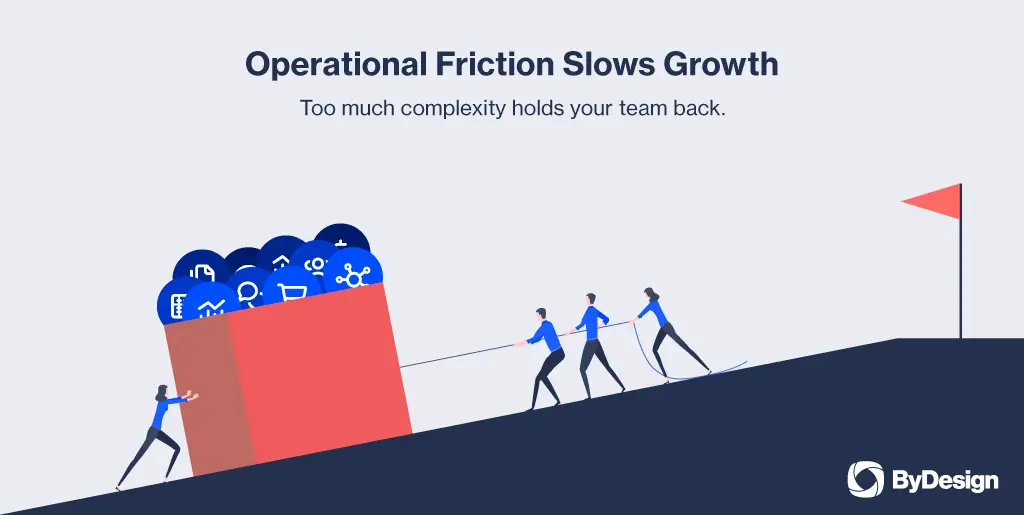
Connected Systems Create Stronger Alignment
Companies need systems capable of supporting multiple growth initiatives without creating disconnect between departments, data, and experiences.
Connected systems help organizations align customer and field experiences, improve reporting visibility, simplify compensation management, reduce manual reconciliation, support promotions and incentives more effectively, and create more consistent workflows across the organization.
Instead of forcing companies to rebuild processes every time strategies change, connected infrastructure allows organizations to adapt while maintaining visibility and clarity across the business.
This becomes especially important as businesses continue evolving how customers, the field, and corporate teams interact across the organization.
The foundation supporting these initiatives matters just as much as the initiatives themselves.
This philosophy has shaped how we’ve built our software for more than 25 years. Our platform was designed specifically for the operational realities of direct selling, giving companies the flexibility to support evolving business strategies while maintaining visibility, scalability, and control.
As highlighted in Better with ByDesign: 25 Years of Empowering Direct Selling Success, organizations today need more than standalone tools. They need configurable infrastructure capable of supporting commissions, incentives, ecommerce, reporting, genealogy management, and field engagement within one connected ecosystem.
Connected Systems Support Sustainable Growth
Growth initiatives matter. Flexibility matters. Customer expectations continue to change. But sustainable growth becomes much harder when friction builds across disconnected systems and experiences.
Looking to reduce friction, improve visibility, and create a more connected growth strategy? Explore how ByDesign helps direct selling organizations scale with confidence.
Author: ByDesign Technologies a Retail Success Company
Originally Published In: The World of Direct Selling
Learn more at ByDesign.com or contact us to schedule a direct selling software demo.
Contact Us
Learn how the Freedom mlm software can help take your direct selling company to the next level.